Under the Same Stars
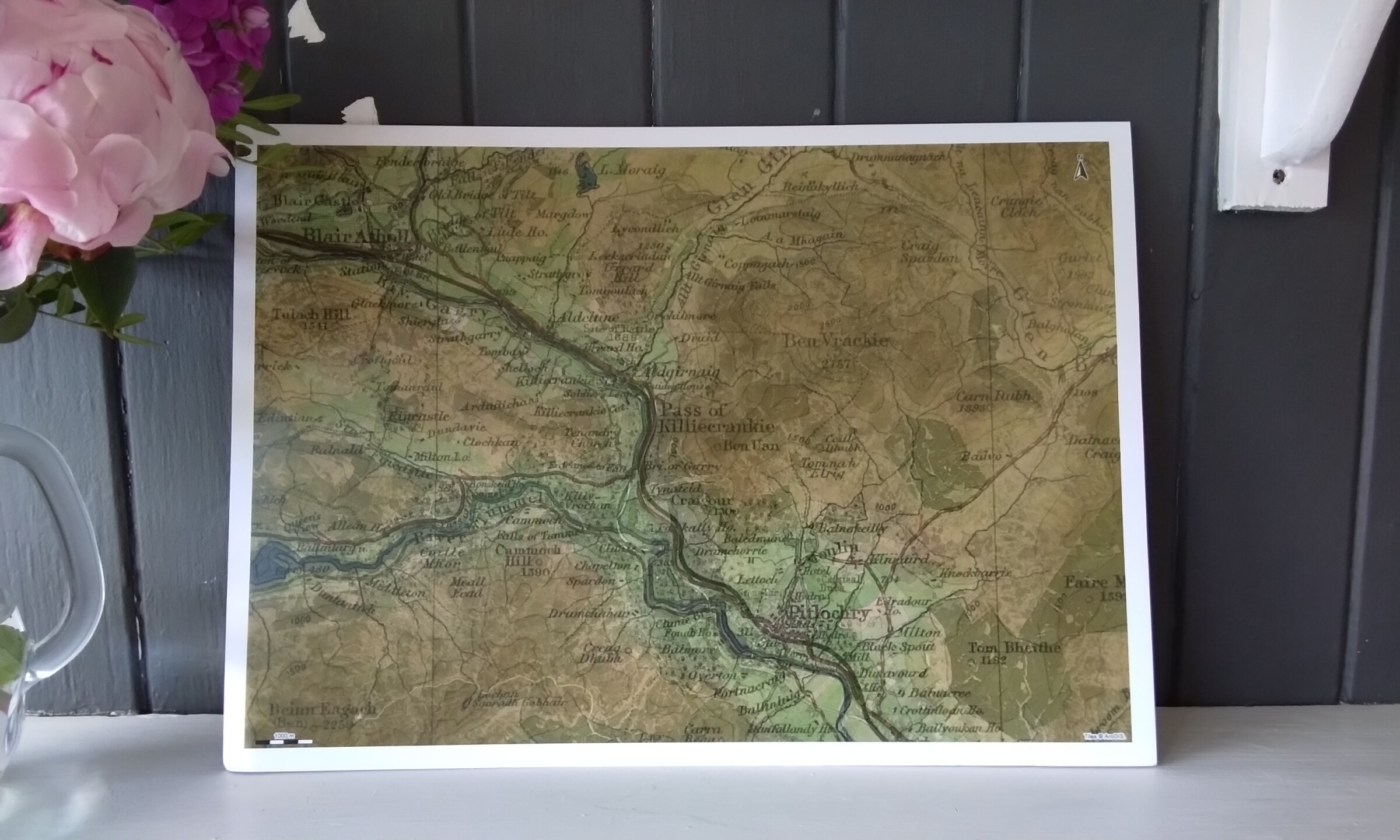
I grew up in the north of Scotland, in Killiecrankie, Perthshire; the image is a map i made for myself,and I lived through the days before Calpol, when the kitchen was also the pharmacy.
There was whisky rubbed on the gums of teething children, onions placed on the soles of the feet to draw out a fever, flour and milk to stop loose bowels, bicarbonate of soda for sickness, ginger for an upset stomach, and brown sugar dissolved in warm water for colic.
The women had a way of knowing—or, at least, they spoke with such certainty that nobody thought to question them. Gatherings became an education. You listened while hands worked and stories travelled around the room, carrying knowledge from one woman to another. Some of the remedies probably helped, some were folklore, and some would horrify a modern health visitor.
A ceilidh was a treat. It was not the grand affair now associated with places such as Blair Castle, but a night in the village hall with vats of soup and stovies, trays of cheese and biscuits, and everyone drawn into the same room.
For one night, the usual lines blurred—rather in the spirit of the Christmas Truce of 1914, when soldiers met in no-man’s-land and some played impromptu games of football.
Except ours had fiddles, stovies and considerably more whisky.
Flasks and bottles were passed around like a game of pass the parcel, with a drink taken whenever the music stopped. Women sipped from teacups whose innocent china belied their amber contents.
We children were largely left to our own devices. We ran between the dancers’ legs, escaped into the night and eventually woke beneath piles of coats in a neighbour’s house before making our own way home.
Christmas had not yet swallowed winter whole. Hallowe’en was a feast of guising—what would now be called trick-or-treating—with a carved turnip with a spoon and lit by a candle. The smell of a burning turnip is one I will never forget.
There were parties involving apple bobbing in increasingly spit-filled water and enormous treacle-covered scones hanging from string, which we attempted to bite with our hands tied behind our backs. The pennies we collected helped to pay for the village Christmas party, and then we all prepared for Hogmanay.
Presents were nice, but being effectively unsupervised for a week while the village first-footed in steadily narrowing circles of reason was delightful.
Last week, I went to a ceilidh with a friend at The Glen Café at St Mary’s Loch. I love working there, and I still find it remarkable that I can walk away from a shift and straight into the Loch of the Lowes.
My friend gracefully submitted to the generous portions of whisky as his cup was repeatedly refilled, and he made a grand showing in Strip the Willow. The fabulous Riddell Fiddles played up a storm, and the atmosphere was electric.
How times change.
Firstly, I can no longer run between the dancers’ legs to see whether I can make them fall. Secondly, as the designated driver, my own tipple had to wait until after the trip to the chippy.
By then, the anticipation created by its aroma had been softened by end-of-night chips and whisky talk. We walked the dog beside the river and talked into the night beneath the same stars that had watched over my childhood antics.
Perhaps that is what the evening returned to me—not simply nostalgia, nor the belief that everything was better in the past, but the recognition of something carried.
Knowledge. Mischief. Stubbornness. The quiet instruction of those who lived before us.
The body remembers what the mind has tidied away. Under those same stars, the ancestral line still spoke.
It put me in mind of this poem from my forthcoming collection, Constellations. It belongs to the Andromeda Nebula.
Kennt Truth
He steadied me,
In loving tones,
Framed within his arms,
Safe and loved,
The object of desire.
Passion learned,
Trauma trained,
Met with guarded touch,
The home he made,
Invited in always as a guest.
From deep within,
Kennt truth,
The ancestral line spoke clear,
And stood before him,
A reckoning,
No more to live at heel.
Suzane Donaldson (2026)