Mirror, mirror on the wall...
Well, it’s been a week.
Some weeks feel like stamping on a fire only to spread it, and then stamping harder. This has been one of those weeks, and somewhere in the middle of it I started thinking about mirrors — and about being a social actor in a world where our tools increasingly perform the reflections of our actions.
The week started with a video by Hank Green, The Second (or perhaps 3rd) Most Important Technology. It is a conversation with Virginia Postrel about her book The Fabric of Civilization: How Textiles Made the World, which has promptly landed on my wish list.
There is direct evidence of humans making cordage around 50,000 years ago. Think about that for a moment. Long before industry, computers or satellites, somebody took individual fibres and worked out that twisting them together produced something stronger.
That is technology.
But it is also thought made physical.
A problem encountered, a solution imagined, a technique learned, repeated and eventually passed to somebody else. From cordage came rope, nets, baskets, cloth and countless other objects, each carrying the decisions and knowledge of the people who made them.
Tools do not merely extend what we can do. They preserve something of how we think.
And once I started looking at technology that way, I began seeing mirrors everywhere.
I was unsuccessful at interview this week. I had prepared for the social stage of the role: learned the framework, practised the words, considered the clothes, prepared my examples and stepped into the mindset required.
And I was amazing.
I played my part, and I played it well.
I did not do that preparation in isolation. AI helped me. I asked it to interrogate my answers relentlessly against the behaviours being assessed.
Which leaves me wondering: to what extent was my AI reflecting the assumptions already embedded in the framework I had given it? And, simultaneously, how much had it learned from the assumptions, experiences and patterns I brought to every answer?
The mirror was looking into another mirror.
I use technology to make, store and display my art. The cartographers whose work I use employed the technologies available to them to measure and represent the landscape. Sergei Korolev oversaw the development of Sputnik 1, launched in 1957, opening another chapter in humanity's ability to observe Earth from beyond it. Decades of satellite science followed. Gladys West's mathematical work modelling the precise shape of the Earth helped make the accuracy of modern GPS possible.
Now I can sit at a computer in the Scottish Borders and lay the present coastline faintly across a map drawn generations ago.
One human interpretation of the landscape reflected through another.
Carl Jung wrote about the collective unconscious and the recurring patterns human beings inherit and reproduce. Perhaps the interesting thing about our tools is not simply that we make them, but that we continually pour those patterns into them.
And increasingly, the tools answer back.
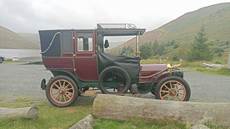
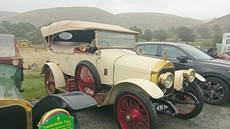
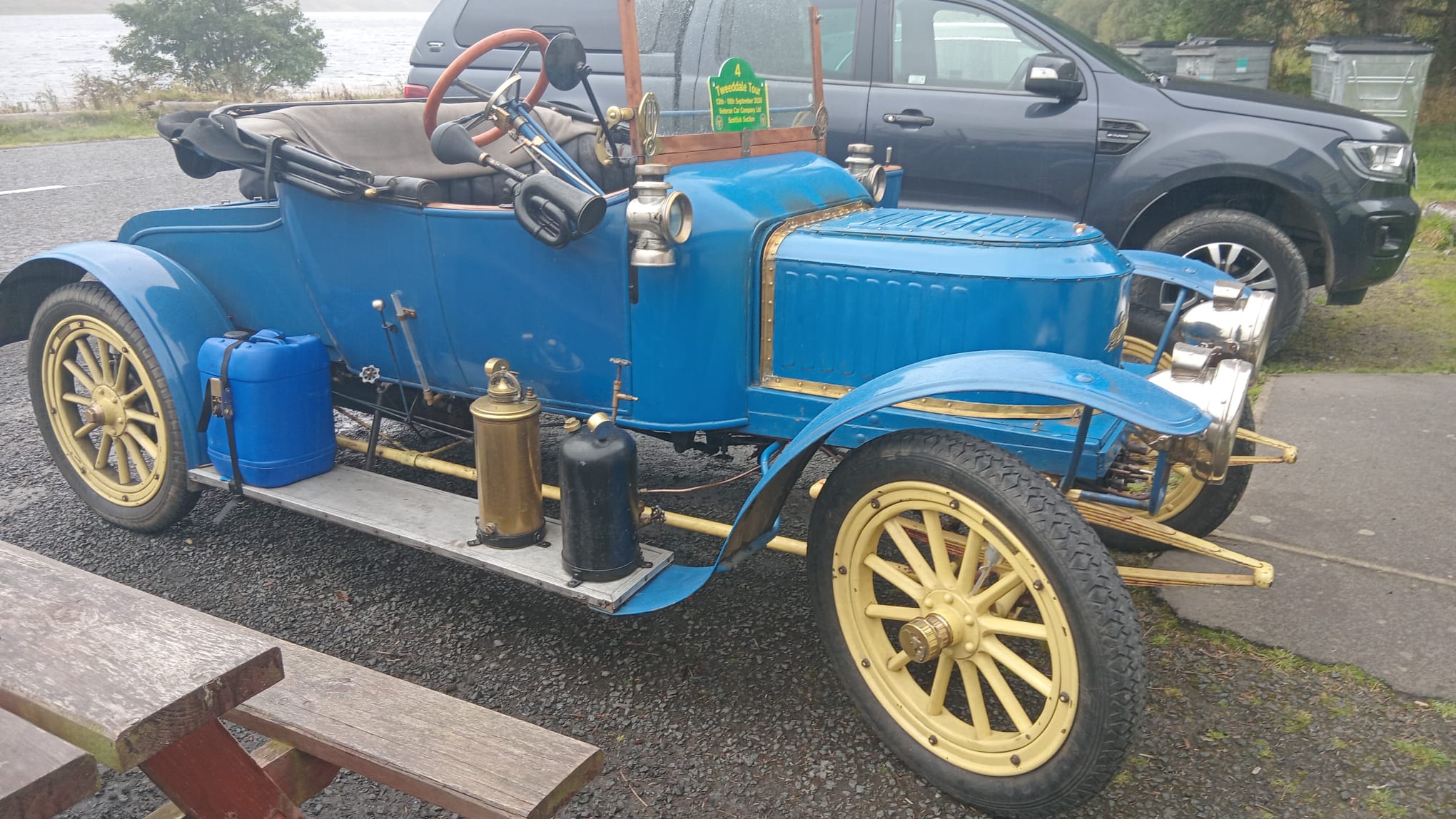
Today I had the privilege of seeing some very, very old cars.
I squealed, “It’s Chitty Chitty Bang Bang!” to the hilarity of the customers. I also had the pleasure of seeing John Davidson MBE again for the first time since I Swear was released. He and his mate were off to Ireland for a book signing, and they fair made our day.
Those cars were once new technology too. Johns story is recorded forever, from the imprint of cave dwellers to binary data.
Now they carry something else: memory, stories, affection, recognition. We look at them and see considerably more than machinery.
John continues to bring hope and humour to people living with Tourettes and their loved ones.
So perhaps that is what I have been pondering this week:
What happens when we build increasingly powerful mirrors using the assumptions of the societies that made them?
And:
How far does social evolution depend upon the mirrors we create?
Here are some cool pictures of very, very old cars while you ponder that, dear reader, the blue one is a Stanley Steamer!!!!!!!!!!!!!!!